
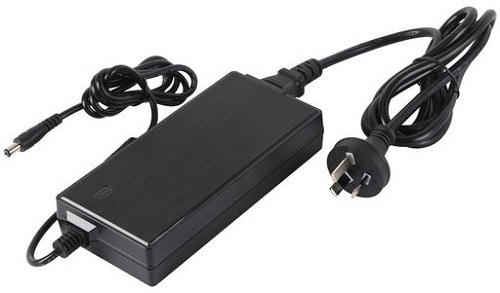
While the 12V standard dominates the automotive world and basic consumer electronics, the 24V power supply is the unsung workhorse of the industrial and commercial sectors. From automated factory lines to large-scale LED lighting installations, 24V systems offer distinct advantages that make them the preferred choice for demanding applications. For professionals and hobbyists alike, knowing when to step up to 24V is key to designing efficient, reliable systems.
Campad Electronics has supplied the Australian market with robust power solutions for decades, witnessing firsthand the shift towards higher voltage standards in modern equipment. Understanding the specific benefits of 24V, particularly regarding efficiency over distance and reduced current draw, can save significant time and money in installation costs and long-term maintenance.
This article explores the primary use cases for 24V power supplies, explains why they are the standard for automation and industry and details the safety and efficiency benefits they offer over lower voltage alternatives.
Why 24V Is Used
The decision to use 24V typically comes down to physics, specifically, the relationship between voltage, current and resistance. To deliver a specific amount of power (Watts), you can either increase the current (Amps) or increase the voltage (Volts).
By doubling the voltage from 12V to 24V, you halve the required current to deliver the same amount of power. This reduction in current has two major practical benefits:
- Reduced Voltage Drop: All electrical cables have internal resistance. When current flows through them, some voltage is lost as heat. Lower current means less voltage is lost along the cable run. This allows 24V systems to transmit power over much longer distances than 12V systems without the device at the end receiving insufficient power.
- Thinner Cabling: Because current dictates the thickness of the wire required, 24V systems can use thinner, lighter and less expensive cabling than equivalent 12V systems. In large commercial installations with kilometres of wiring, this represents a massive cost saving.
Industrial And Commercial Applications
Due to these efficiency benefits, 24V has become the standard voltage for a vast array of professional equipment.
Automation and Control
In the world of industrial automation, 24V DC is practically the universal language.
- PLCs (Programmable Logic Controllers): The computers that run assembly lines and machinery almost always operate on 24V.
- Sensors and Relays: Inductive proximity sensors, photoelectric beams and control relays are overwhelmingly designed for 24V operation. This standardization allows components from different manufacturers to be integrated easily into a single control panel.
Commercial LED Lighting
While 12V LED strips are common for short runs (like under a kitchen cabinet), 24V is the professional choice for commercial lighting.
- Longer Runs: A 12V LED strip will often suffer from “fade” towards the end of a 5-metre roll due to voltage drop. A 24V strip can often run up to 10 or 15 metres with consistent brightness from start to finish.
- Efficiency: For large architectural lighting projects, the efficiency gains of 24V result in less wasted heat and lower energy bills over time.
Motors and Actuators
Many electromechanical devices perform better at 24V.
- Torque and Speed: 24V DC motors can often generate more torque and maintain speed better under load than their 12V counterparts.
- 3D Printers and CNC Machines: These devices often use 24V power supplies to heat the print bed faster and drive the stepper motors with greater precision.
Safety Considerations
Despite being double the voltage of standard 12V systems, 24V is still classified as Extra-Low Voltage (ELV). In Australia, this classification generally covers voltages below 50V AC or 120V ripple-free DC.
This designation is critical because it means 24V systems generally do not pose a high risk of lethal electric shock. This allows technicians and electricians to work on control circuits without the stringent isolation procedures required for mains voltage (230V).
However, safety is not just about shock risk. 24V systems can still deliver high currents. A short circuit in a high-amperage 24V system can create a significant spark and enough heat to melt insulation or start a fire. Therefore, using quality 24V power supplies from Campad Electronics that feature built-in short-circuit and over-current protection is essential for maintaining a safe environment.
12V vs 24V Comparison
To help visualise when to choose which voltage, refer to the comparison table below.
| Feature | 12V DC System | 24V DC System |
| Current Draw | Higher (Requires thicker cables) | Lower (Uses thinner cables) |
| Voltage Drop | High (Power loss over distance) | Low (Good for long distances) |
| Typical Range | Short runs (e.g., inside a car) | Long runs (e.g., factory floor) |
| Common Uses | Automotive, Camping, Home DIY | Industrial, Automation, Large LED |
| Component Cost | Generally cheaper (Consumer grade) | Slightly higher (Industrial grade) |
| Shock Risk | Negligible | Negligible (Still ELV) |
FAQs
Why use 24V instead of 12V?
The main reason to use 24V is to reduce voltage drop over long cable runs and to lower the current draw. This allows for thinner, cheaper cabling and ensures consistent performance for devices located far from the power source.
Are 24V power supplies dangerous?
24V is considered “Extra-Low Voltage” and typically does not pose a lethal shock hazard to humans. However, high-current 24V supplies can cause sparks, burns or fires if short-circuited, so proper fusing and quality equipment are still mandatory.
Can I use a 24V power supply on a 12V device?
No. Plugging a 12V device into a 24V power supply constitutes a severe over-voltage event. This will almost certainly overheat and destroy the components inside the 12V device instantly.
Can I use a 12V power supply on a 24V device?
No. This is an under-voltage scenario. The 24V device will likely not turn on at all or it may try to draw excessive current to compensate, potentially damaging the power supply or the device itself.
How far can I run a 24V cable?
This depends on the thickness of the cable and the power draw of the device. However, as a general rule, you can run 24V cables roughly twice as far as 12V cables of the same thickness before voltage drop becomes a problem.
Do I need special cables for 24V?
Standard electrical wire is usually rated for up to 300V or 600V, so regular copper cabling is perfectly fine for 24V. You just need to ensure the wire gauge (thickness) is sufficient for the Amperage the device will draw.
Is 24V AC or DC?
Most modern electronics and automation equipment use 24V DC (Direct Current). However, 24V AC (Alternating Current) is used in some specific applications, such as irrigation controllers and some HVAC thermostats. Always check the label, DC is marked with a straight line (⎓) and AC with a wavy line (~).
Why do trucks use 24V?
Heavy vehicles use 24V to supply the massive power needed to start large diesel engines. A 12V starter motor for a huge truck would require incredibly thick cables to carry the current; 24V allows for more manageable cabling.
Can I touch 24V wires?
While 24V is unlikely to shock you, you should never touch live wires. Wet skin or open wounds can lower your body’s resistance enough to feel a shock and accidental short circuits can cause burns.
What is a “DIN Rail” power supply?
In industrial settings, 24V power supplies are often mounted on a standard metal rail called a DIN rail inside a control cabinet. This allows for neat, modular installation alongside circuit breakers and PLCs.
Conclusion
While 12V remains the king of consumer convenience, 24V is the clear leader for efficiency, reliability and distance. Its ability to deliver power with less loss and thinner cabling makes it indispensable in industrial automation, commercial lighting and professional control systems. When designing a system that requires long cable runs or reliable operation under load, stepping up to a 24V power supply is often the smartest engineering decision you can make.

